
Geotechnical Drilling
Geotechnical drilling is the process of exploring the ground beneath a project site as part of geotechnical investigations to understand the soil, groundwater, and bedrock conditions. At Seaboard Drilling, we help our clients collect subsurface data and samples so they can make informed decisions about how to design and support their structures.
Every project, including buildings, roads, schools, hospitals, and other infrastructure, relies on stable ground for support. By gathering information about what lies below the surface, geotechnical drilling helps project teams plan safely, build responsibly, and select foundation solutions suited to the site.
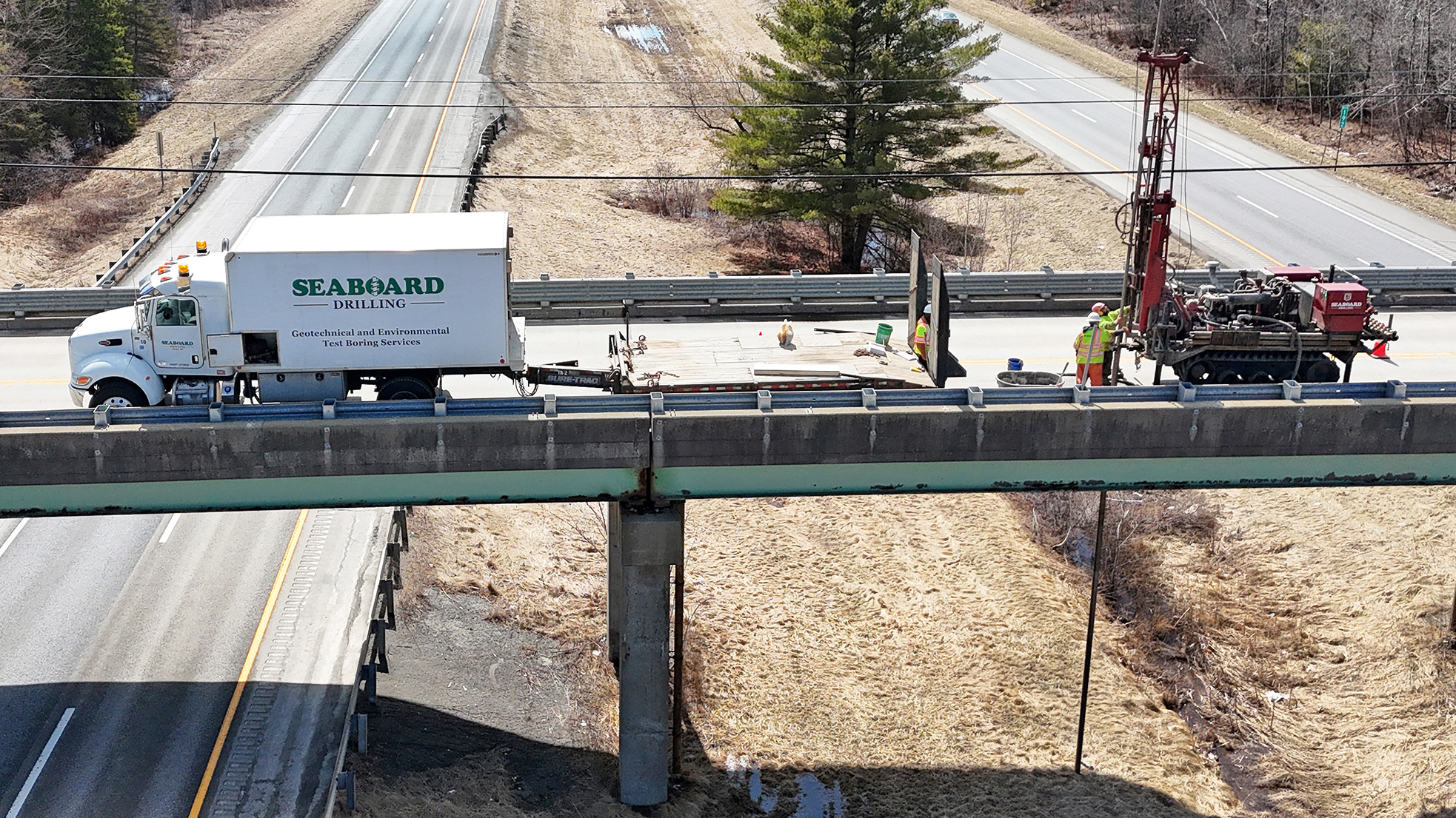
How Geotechnical Drilling Is Used
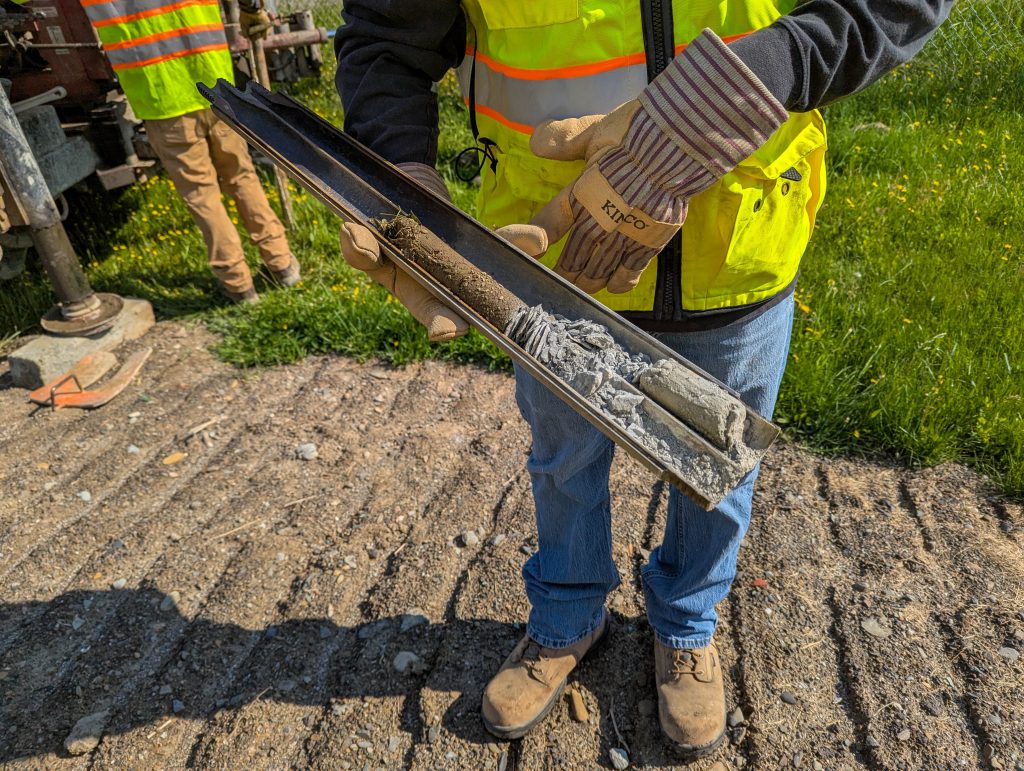
Geotechnical drilling provides subsurface information that geotechnical engineers use to develop recommendations for foundations, earthwork, and pavement. This information supports the design of buildings, roads, bridges, and other infrastructure by helping project teams understand the conditions beneath a site. Reliable data about soil, rock, and groundwater conditions allow engineers to make informed decisions and reduce risks associated with construction and long‑term performance.
Geotechnical Expertise at Seaboard Drilling
Seaboard Drilling has extensive experience working throughout New England, where varied soil and rock conditions require careful planning and knowledgeable crews. Our team understands how local geology affects subsurface investigations and uses that experience to support project teams with reliable subsurface information.
We maintain a range of drilling and probing rigs so we can match equipment to the specific needs and limitations of each site. This flexibility helps us access challenging locations while supporting efficient field operations.
Because geotechnical drilling is an investigative process, our focus is on collecting high‑quality samples and data with the goal of minimizing disturbance to your site. We use equipment configurations and support tools that help keep work areas orderly, reduce surface disturbance, and maintain productivity throughout the project.
Drilling & Testing Methods
The following are the geotechnical services that we provide:
- Drilling Techniques:
- Solid Stem Auger – We use continuous flight (solid stem) augers for shallow sampling or to probe for ledge.
- Hollow Stem Auger (2 ¼”, 3 ¼”, 4 ¼”, and 6 ¼”) – We utilize hollow stem auger borings for SPT sampling of soil and monitoring well installation for shallow wells.
- Casing (3”, 4”, 5” and 6”) – We provide cased borings using the drive and wash method of drilling with several sizes of casing available. Cased borings are used for SPT sampling, Shelby tube sampling, vane shear testing, monitoring well installation and other in-situ testing.
- Mud Rotary
- Air Percussion
- ODEX
- Cone Penetrometer Testing (CPT)
- Concrete/Asphalt Coring
- Low Clearance Drilling with specialized drill rigs
- Rock Coring: NQ double tube and HQ double and triple tube – We provide wire-line core drilling for continuous coring and sampling of bedrock.
- Standard penetration testing (SPT) – calibrated auto-hammers are available on most of our drilling rigs.
- Undisturbed Sampling
- In-situ Testing – Vane Shear
- Monitoring Well Construction
- Well Abandonment
- Borehole Grouting
- Extensometer Installation
- Inclinometer Installation
- Vibrating Wire Piezometer Installation
- Test Pit Excavations
Cone Penetrometer Testing (CPT)
Cone Penetration Testing (CPT) provides continuous, real‑time information about subsurface conditions by advancing a sensor-equipped probe into the ground. CPT can be an efficient method to evaluate soils on sites with sands, silts, and clays, supporting timely decisions during geotechnical investigations. We can integrate our mobile CPT unit with our traditional test boring drill rigs, allowing both methods to work together and helping streamline field operations as part of a coordinated subsurface assessment. Learn more: What is Cone Penetration Testing? – Seaboard Drilling
Want to Learn More?
Contact us to learn more about our geotechnical drilling services or use our online form to request services.
Frequently Asked Questions
Subsurface explorations provide information about soil and rock conditions, helping project teams design foundations and structures that are well‑suited to the site. Planning for subsurface conditions early can help reduce the likelihood of future issues such as settlement, which may otherwise require costly revisits to the project site.
Yes. Even when project teams believe they understand what lies below the ground surface, unexpected conditions are common. In many cases, the actual subsurface profile differs from assumptions or experience, making site‑specific exploration a valuable step in project planning.
We offer both drilling services and test pit excavations. Our team can support projects that require test pits, and we have excavators available to perform this work when appropriate.